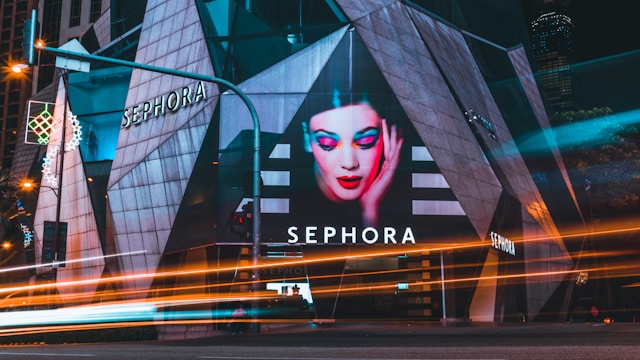
K-beauty’s global ascent is entering a new phase—and Sephora wants a front-row seat. The beauty retailer has announced a global partnership with CJ Olive Young, dedicating curated Olive Young spaces inside Sephora stores and on its digital platforms.
The move signals that Korean beauty is no longer just a popular category add-on. It is becoming a strategic growth engine for global beauty retail, with Sephora positioning itself as both curator and accelerator.
What the Partnership Includes—and Where It’s Launching
Beginning in the second half of 2026, Olive Young–branded zones will appear in Sephora locations across the U.S. and Canada, as well as key Asian markets including Singapore, Malaysia, Thailand, and Hong Kong. The collaboration will extend further in 2027, expanding into the Middle East, the U.K., and Australia.
The rollout is notable for its scale and ambition. Rather than spotlighting individual Korean brands, Sephora is effectively importing Olive Young’s retail model—long considered Korea’s answer to Sephora—into its own ecosystem.
This partnership also complements Olive Young’s previously announced plans to open its first standalone U.S. stores in California, with an initial Los Angeles location set to debut in May. Together, the two strategies create parallel entry points: one embedded within an established global retailer, the other fully owned and operated.
Why Olive Young—and Why Now
Demand for K-beauty and wellness products has been steadily rising worldwide, driven by social media, ingredient transparency, and Korea’s reputation for innovation in skincare science. Research released earlier this month by Consumer Collective suggests that global recognition and physical retail concepts are the next growth stage for Korean brands such as Anua, Tir Tir, Beauty of Joseon, and Olive Young itself.
Olive Young’s leadership has been clear about its intent. The company views global partnerships as a way to extend the reach of Korean brands while maintaining cultural authenticity—an increasingly important factor as K-beauty moves into mass and prestige retail channels.
From Sephora’s perspective, the partnership reinforces a long-standing narrative. Sephora’s global merchandising leadership has emphasized that the company was among the first major North American retailers to introduce K-beauty more than 15 years ago. What’s changed is the scale: today, Korean beauty is one of the fastest-growing and most commercially powerful segments in the industry.
Competitive Pressure Is Rising Across Beauty Retail
Sephora is far from alone in chasing K-beauty momentum. Earlier this month, Korean skincare brand Haruharu Wonder announced a nationwide rollout with Target, underscoring how mainstream the category has become. Meanwhile, Ulta Beauty significantly expanded its K-beauty assortment last year through a partnership with K Beauty World, adding a broad slate of emerging brands.
What sets the Sephora–Olive Young collaboration apart is depth. Rather than simply adding shelf space, Sephora is allocating dedicated environments—both physical and digital—that mirror Olive Young’s curated, discovery-driven approach. This suggests a belief that K-beauty performs best when presented as an ecosystem, not a collection of SKUs.
What This Means for the Future of K-Beauty Retail
This partnership reveals a broader shift in global beauty retail. As categories mature, retailers are moving beyond brand-level experimentation toward platform-level collaborations. In effect, Sephora is treating Olive Young not just as a supplier, but as a strategic partner with its own retail DNA.
For consumers, that likely means deeper assortments, faster trend adoption, and more educational in-store experiences. For the industry, it signals that K-beauty’s evolution—from niche import to global standard—is well underway.
The next test will be execution. If Sephora can successfully integrate Olive Young’s curation philosophy without diluting its identity, the partnership could become a blueprint for how global retailers scale culturally rooted beauty movements.
Source: Based on reporting from Retail Dive