Store visits in 2025 tell a clear story: consumers are increasingly choosing either value-driven thrift stores or experience-led luxury retailers, while traditional apparel chains struggle to keep pace. According to new foot traffic analysis from Placer.ai, the apparel market is no longer moving in one direction—it’s pulling apart.
This polarization, often described as a “bifurcated retail landscape,” is becoming one of the defining characteristics of post-pandemic retail. And heading into the holiday season, both ends of the price spectrum appear structurally better positioned than the middle.
Thrift Stores: Consistent Growth, Broadening Appeal
Among all apparel-related formats, thrift stores were the standout performers in 2025. With the exception of February, monthly visits from January through November rose by more than 5% year over year—a level of consistency that few retail segments can claim.
This growth reflects more than bargain hunting. Rising prices across categories have normalized secondhand shopping, expanding its appeal beyond budget-constrained consumers. Thrift retail has effectively transitioned from a niche alternative into a mainstream channel, supported by cultural acceptance and improving store operations.
Placer.ai’s data suggests that this shift is durable, not seasonal.
Luxury Retail: Stabilized by High-Income Shoppers
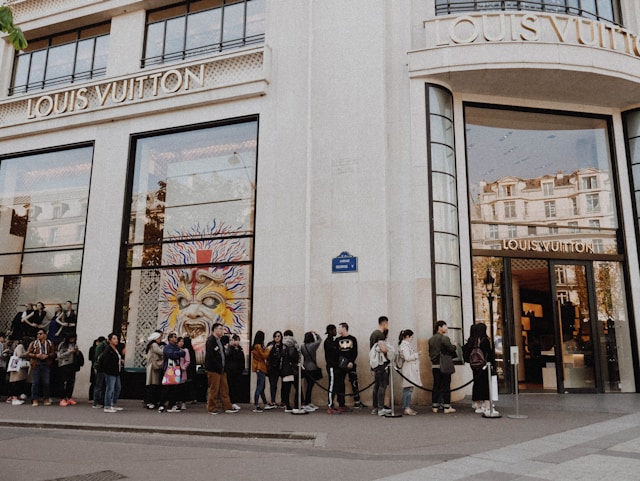
Luxury apparel stores also outperformed traditional chains, though for very different reasons. For most of 2025, luxury foot traffic hovered near or above 2024 levels, indicating resilience rather than rapid growth.
The stabilizing force here is income concentration. Since 2022, the median household income of luxury retailers’ captured markets has steadily increased, reinforcing the segment’s growing reliance on high-income shoppers as prices rise. In plain terms: luxury is becoming more exclusive, not broader.
This dynamic helps explain why luxury retail has held steady despite macroeconomic uncertainty. The customer base is smaller—but far less price sensitive.
Trading Down Without Fully Dropping Out
One of the more revealing signals in the data comes from thrift retail’s income mix. Since 2022, the median household income in thrift stores’ captured markets has inched upward, though it remains below the U.S. median of $79,600.
That pattern suggests some higher-income consumers are selectively trading down—choosing thrift for certain categories or occasions rather than abandoning premium retail altogether. Even during October and November, when thrift shoppers’ median income dipped slightly, the decline was less pronounced than in luxury, pointing to limited seasonal “leakage” among higher-income thrift shoppers.
This hybrid behavior underscores a broader consumer mindset shift: value is being reassessed, not just sought at the lowest price.
Why the Middle Is Being Squeezed
Traditional apparel chains sit in an increasingly uncomfortable position. They are often too expensive to compete with thrift and too undifferentiated to compete with luxury. Without a clear value proposition—either on price or experience—store visits are harder to sustain.
From a StoreTechNews perspective, this has implications beyond merchandising. Mid-market retailers often lag in store analytics, personalization, and experiential tech, making it harder to adapt when consumer expectations shift.
Two Different Playbooks for Success
As Placer.ai content writer Ezra Carmel notes, neither end of the spectrum can rely on shortcuts. Luxury retailers can’t control macroeconomic conditions, but they can double down on authentic, premium in-store experiences that reinforce loyalty. Thrift stores, meanwhile, can’t simply “premium-ize” inventory—but they can invest in operations that enhance the treasure-hunt experience and reinforce value.
The common thread? Execution matters more than positioning alone.
Looking Ahead: Polarization Is Becoming Structural
The takeaway for 2026 is not that thrift and luxury are temporary winners—it’s that retail polarization is becoming structural. Income dispersion, price sensitivity, and experience expectations are reshaping where consumers physically show up.
Retailers that clearly understand who they serve—and why shoppers choose them over every other option—will continue to gain traffic. Those stuck in the middle may find that foot traffic, like consumer sentiment, no longer defaults in their favor.
This article references data and reporting from[ChainStoreAge]