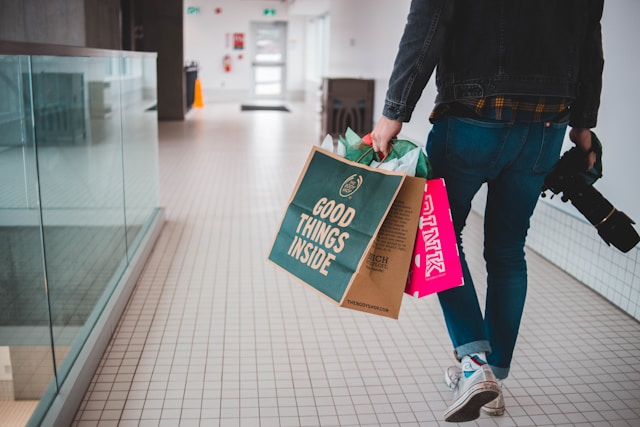
Retail is entering 2026 facing a paradox: consumers are still spending, but they are doing so more cautiously, more selectively, and with far less patience. Against that backdrop, retailers are being pushed to justify every technology investment, rethink physical stores, and absorb ongoing supply chain shocks.
Taken together, the trends below reveal a clear theme: 2026 will not reward experimentation for its own sake. It will reward execution, discipline, and differentiation.
A More Selective Retail Economy Takes Shape
Before drilling into individual trends, it’s important to understand the macro context. Analysts broadly agree that the retail sector is heading into a slower-growth, more uneven year. A December outlook from PwC describes 2026 as a “less predictable” deal environment, with fewer transactions but higher strategic stakes.
Instead of expansion at all costs, retailers are reassessing portfolios, exiting underperforming categories, and doubling down where they still have an edge. Private equity is growing more cautious, while overseas buyers see U.S. retail assets as an attractive entry point.
This divergence—strong getting stronger, weak falling further behind—sets the stage for the six trends below.
1. AI Spending Surges, but Retailers Face an ROI Reckoning
Artificial intelligence is no longer optional in retail, but its payoff remains uneven. Consumer use of AI tools for product discovery and decision-making surged during the 2025 holiday season, fundamentally changing how shoppers search and compare.
Retailers, however, remain late adopters. A 2025 adoption study by Wharton and GBK Collective found that retail trails other sectors in deploying generative AI, in part due to organizational friction and skepticism. That gap is now risky.
The real challenge for 2026 is return on investment. Unlike software or media, retail’s dependence on physical goods makes AI gains harder to quantify. This year will separate retailers embedding AI into demand forecasting, inventory planning, and customer service from those experimenting without clear metrics. The pressure to prove value will intensify.
2. Value Becomes the Dominant Consumer Mindset
If 2025 was about inflation anxiety, 2026 is about budget fatigue. Economists expect consumers to keep spending—but far more defensively.
According to Moody’s Ratings, real personal consumption growth is projected to slow to roughly 1.5%, down sharply from the post-pandemic rebound years. Wage growth is barely keeping pace with inflation, while healthcare and housing costs continue to climb.
The result is a sustained shift toward value-oriented retailers. Spending data already shows double-digit growth at Amazon and Costco, underscoring how scale, pricing power, and logistics efficiency are winning customer loyalty.
In 2026, retailers that combine value with reliability—strong supply chains, consistent pricing, and solid digital experiences—will continue taking share.
3. Malls Enter Reinvention Mode, Not Revival
The narrative around malls is quietly changing. Rather than a dramatic comeback, 2026 marks a redefinition of what a “mall” actually is.
Investments from players like Simon Property Group, Dillard’s, and Walmart point to a future where retail anchors broader mixed-use ecosystems. Housing, healthcare, offices, and entertainment are increasingly central to mall economics.
Even so-called B malls are being reevaluated—not as dying assets, but as platforms for redevelopment. In practical terms, many future “malls” may not look like malls at all. Retail becomes the glue, not the sole attraction.
4. Pricing Transparency Becomes a Legal and Brand Issue
Pricing strategy is moving out of the shadows. In 2025, New York enacted a law requiring retailers to disclose when algorithmic or personalized pricing is used, with Attorney General Letitia James emphasizing consumers’ right to know how prices are set.
More regulation is likely in 2026 as AI-driven pricing tools proliferate. The risk for retailers isn’t just legal—it’s reputational. Consumers are increasingly sensitive to perceived unfairness, especially if pricing appears to vary by personal data rather than market conditions.
Best practices are becoming clearer: avoid using sensitive consumer attributes, rely on aggregated data, and ensure location-based pricing reflects real cost differences. Transparency is quickly becoming a competitive advantage.
5. Same-Day Delivery Sets a New Standard
Speed is no longer a perk; it’s an expectation. Retail giants are escalating the delivery arms race, pushing fulfillment closer to real-time.
Amazon is expanding same-day and even sub-30-minute delivery through a growing fulfillment network, including perishables. Meanwhile, Walmart is leveraging stores, clubs, fulfillment centers, and even drones to shorten delivery windows.
This trend has a deeper implication: fast delivery is eroding one of physical retail’s last structural advantages—immediacy. In 2026, stores must compete not just on speed, but on experience, service, and relevance.
6. Tariffs Continue to Reshape Costs and Pricing
Tariffs were a defining uncertainty in 2025, and their effects will ripple through 2026. Many retailers pulled inventory forward ahead of new levies, temporarily shielding margins. That buffer is now thinning.
As higher-cost inventory flows in, price increases become harder to avoid. Apparel group PVH Corp. has already reported inventory cost increases partly tied to tariffs, and brands like On, E.l.f. Cosmetics, and Lululemon have signaled price hikes.
The strategic question for 2026 is not whether tariffs matter—they do—but how transparently retailers manage the fallout. Passing costs to consumers without a clear value story risks accelerating trade-down behavior.
What 2026 Ultimately Signals for Retail
Zooming out, these trends point to a retail industry under pressure to mature. Easy growth is gone. Consumers are sharper, regulators more involved, and technology investments more scrutinized.
The retailers that win in 2026 will be those that make fewer bets—but make them count. AI must deliver measurable gains. Stores must serve a purpose beyond transactions. Pricing must feel fair. And speed must be paired with trust.
In short, 2026 will reward clarity of strategy over scale of ambition.
Source: Based on reporting from Retail Dive