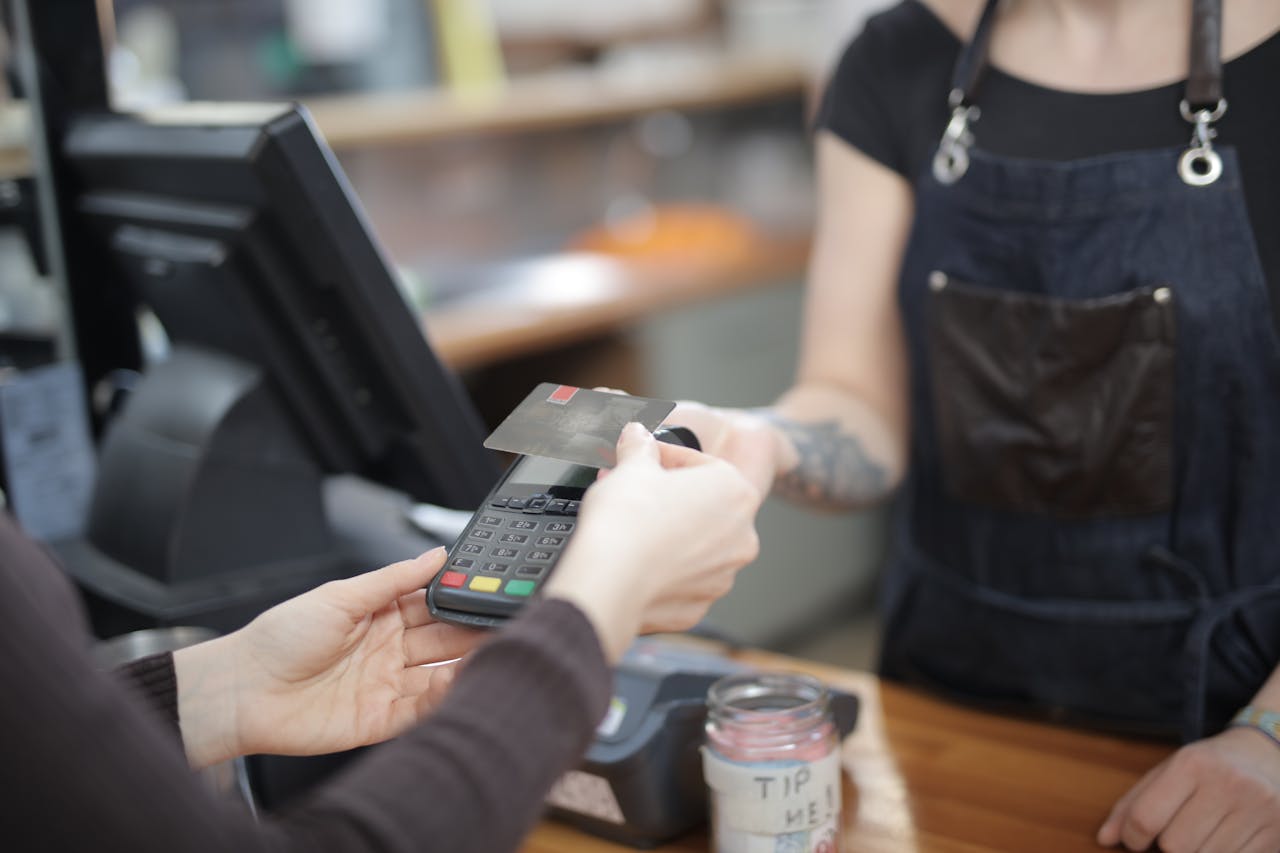
You've likely seen the universal contactless symbol at your local coffee shop or grocery store. This technology has moved from a novelty to a mainstream payment method, transforming how we transact. This guide will demystify contactless payment technology, explaining how it works, why it's secure, and where it's headed next.
What is Contactless Payment Technology? An Introduction
Contactless payment technology allows you to make purchases by simply tapping a card, smartphone, or wearable device on a compatible terminal. It eliminates the need to swipe a magnetic stripe, insert a chip, or handle cash, creating a faster, more fluid checkout experience.
From Cards to Phones: The "Tap-to-Pay" Revolution
The shift from physical swiping and inserting to tapping represents a significant leap in convenience. Instead of fumbling for a PIN or waiting for a chip card to process, a single tap completes the transaction in seconds. This "tap-to-pay" method is now embedded in credit/debit cards and digital wallets like Apple Pay and Google Pay.
A Brief History of Contactless Payment
The journey began in the 1990s with early RFID trials for specialized transit passes. South Korea launched one of the first widespread implementations for public transport in 1995. The technology evolved throughout the 2000s, with the UK and Asia leading adoption. The global push accelerated in the 2010s with the integration of NFC into smartphones, making digital wallets a reality and setting the stage for today's ubiquitous tap-to-pay landscape.
How Does Contactless Payment Work? The Technology Explained
At its core, contactless payment relies on secure, short-range communication between your payment device and the terminal. Let's break down the process.
Understanding NFC: The Engine Behind Tap-to-Pay
NFC, or Near Field Communication, is the specific technology that powers most contactless payments. It's a subset of RFID that enables two electronic devices to communicate when they are within a few centimeters of each other. This close proximity is a key security feature. The terminal sends out a radio signal, and your card or device's NFC chip responds with the encrypted payment information.
The Step-by-Step Process of a Single Tap
The transaction happens in a flash. When you tap your device or card, the payment terminal activates its NFC field. Your payment method's chip powers up and creates a unique, one-time transaction code. This encrypted data packet is sent to the terminal, which forwards it to the payment processor. The bank authorizes the payment, and the confirmation is sent back to the terminal, completing the sale. The entire process typically takes less than two seconds.
RFID vs. NFC Payments: What's the Difference?
While often used interchangeably, RFID and NFC are distinct. RFID (Radio-Frequency Identification) is a broader technology used for tracking inventory, key fobs, and pet chips over longer distances. NFC is a more secure, specialized form of RFID designed for very short-range, two-way communication.
Key Differences in Range, Security, and Use Cases
The main differences lie in their application. RFID can have a range of several meters, while NFC is limited to about 4 centimeters, making it much harder to intercept. NFC also allows for two-way data exchange, which is essential for the secure handshake of a payment transaction. RFID is great for scanning a pallet of goods in a warehouse; NFC is built for securely transmitting your payment details at a checkout counter.
The Major Benefits of Adopting Contactless Payments
The move to contactless isn't just about novelty. It offers tangible advantages for both shoppers and businesses.
Speed and Convenience for Shoppers
Contactless transactions are significantly faster than chip card insertions or cash payments. There's no need to dig for cash, fumble with a PIN pad, or wait for a receipt you don't need. This speed is a major benefit during busy periods, reducing queue times and streamlining the entire shopping experience.
Enhanced Hygiene and Operational Efficiency
The pandemic highlighted the hygiene benefits of reducing physical contact with shared surfaces like PIN pads and cash. For businesses, faster transactions mean they can serve more customers in less time, increasing throughput and improving overall operational efficiency, especially in high-volume environments like transit systems and quick-service restaurants.
Addressing the Top Concerns: Contactless Payment Security
It's natural to wonder if tapping your card is safe. The security measures built into contactless payment technology are robust and multi-layered.
Tokenization: How Your Data is Protected
This is the cornerstone of contactless payment security. When you tap to pay, your actual card number is never sent to the terminal. Instead, the system uses a process called tokenization. It generates a unique, random "token" or one-time code that represents your payment details for that single transaction. Even if a hacker intercepted this token, it would be useless for any other purchase.
Range Limits and Transaction Caps
Security is also physical and financial. The required close proximity (a few centimeters) prevents accidental payments and makes electronic skimming extremely difficult. Furthermore, most regions impose a transaction value limit for contactless taps. For purchases above that limit, you must verify with a PIN, adding another layer of security. Your card also can't be read if it's nestled among others in your wallet.
The Future of Contactless Payment Technology
The evolution of contactless payment technology is moving beyond cards and phones towards a truly seamless experience.
Biometric Payments and the "Connected Car"
We're entering an era of payment authentication using biometrics like fingerprints or facial recognition, enhancing both security and convenience. Imagine authorizing a payment with a glance at a terminal. The "connected car" is another frontier, where your vehicle itself can authenticate payments for fuel, tolls, or drive-through meals without you needing a wallet or phone.
Embracing a Frictionless Financial Future
Contactless payment technology has fundamentally shifted our relationship with transactions. By blending speed, robust security, and unparalleled convenience, it has set a new standard for commerce. As the technology continues to evolve with biometrics and IoT integration, the line between having an item and paying for it will blur even further, creating a truly frictionless financial future for everyone.
FAQ Section: Your Contactless Payment Technology Questions Answered
Is it safe to use contactless payment if my phone or card is lost or stolen?
Yes, the security measures protect you. For a phone, you can remotely lock and wipe it using Find My Device or iCloud. For a card, you should report it lost immediately to your bank, who will freeze it. Fraudulent taps are also covered by your bank's zero-liability policy.
What is the typical spending limit for a contactless transaction?
Limits vary by country and bank but are commonly set to encourage security for low-value, everyday purchases. You'll often find limits between $100 and $250. For transactions above this amount, the terminal will prompt you to insert your card and enter your PIN.
Can I use contactless payments anywhere, or is acceptance still limited?
Acceptance is now extremely widespread. Most major retailers, grocery stores, restaurants, and transit systems support contactless payments. Look for the universal contactless symbol (four curved lines) on the terminal to be sure.
Does using contactless payment drain my phone's battery quickly?
No, it uses a negligible amount of battery. The NFC chip in your phone is very low-power and is only activated for a second or two during a transaction. You won't notice any impact on your daily battery life.